

It was 4:37 AM.
I was awake not because I wanted to be, but because our metrics were flatlining.
We had just poured thousands of dollars into ads for our new health and wellness platform. The value proposition was clear, and we earned a standing ovation at every pitch.
Yet, for some reason, our users weren't sticky.
The truth hit me: we had built a funnel, but loop..
“You don’t need one million users. You need 1,000 users to bring you ten more.”
That night, I drew a circle on my whiteboard, and wrote three questions:
That’s where the loop began.
Most early-stage product managers start with funnels. Acquisition leads to activation, which ideally leads to retention, revenue, and referrals. But funnels have a major limitation. They're linear, whereas growth loops are exponential (when done correctly).
Growth loops are systems that build upon themselves. The output of one stage becomes the input for the next. For instance, every Airbnb guest becomes a potential host. Similarly, every Calendly invite automatically activates new users to the product.
"It's not just about viral growth..."
It's also about systemic growth, where the product experience itself drives scale.
Let's be honest, most acquisition strategies are expensive and unsustainable. Google Ads, influencer campaigns, and SEO all drive spikes but not sustainable growth.
The magic happens when acquisition becomes the start of a loop, rather than just a gate. The goal is to allow every action to create a condition for the next user.
Take Notion as an example. It doesn’t just let you sign up and explore a doc. It allows you to create something worth sharing. Whether it’s a resume template, habit tracker, or team wiki. The moment you share it, the recipient has to sign up to view or use it. Then each new creation becomes an acquisition channel.
Consider Webflow, where every site built on the platform becomes an SEO goldmine. Their template libraries and portfolios rank highly for thousands of search terms, ranging from "portfolio website" to "SAAS landing page." As users create content, it attracts even more users.
The takeaway is clear. Identify what makes your product inherently shareable, then design acquisition flows around it.
Once you get users through the door, the question becomes what makes them stay, and what makes them return? Engagement is the oxygen for loops as it keeps the system alive.
Duolingo is a prime example of this. By using streaks, badges, and reminders that evoke guilt, it has successfully gamified language learning. Each streak strengthens users' emotional investment.
This type of engagement, which is based on behavior, even has an indirect positive impact on SEO by increasing dwell time and reducing bounce rates. As a result, users are more likely to share content organically and less likely to stop using the platform.
Figma is another great example. It creates collaborative network effects by going beyond serving individual designers. Instead, it relies on collaboration.
Designers invite developers, who then invite product managers. Product managers bring in marketers, and each role naturally invites the next, resulting in the product being embedded across teams. This turns engagement into a collaborative cycle, rather than a solo activity.
"When thinking about growth, ask yourself who else needs to be involved for users to achieve success?"
LinkedIn is the ultimate platform for identity-based growth loops. Before LinkedIn, professionals lacked a public-facing online profile.

Identity Loop (Acquisition Strategy): Each LinkedIn profile essentially became a Google-indexed landing page. When recruiters searched for "Marketing Manager San Francisco", they would inevitably end up on LinkedIn, driving new signups as each profile acted as a landing page.
Connection Loop (Engagement Tactic): LinkedIn prompted users to import their contacts and connect, fostering professional FOMO. Each invitation drew more users into the system, increasing the product's value with every connection.
Content & Job Loop (Referral Program): Recruiter job postings, user-written blog articles, and professional sharing created natural referral mechanics, extending the platform's reach. Every like, comment, or application introduced the product to new people
How you can replicate it:
How you can replicate it:
How you can replicate it:
It was 2010.
San Francisco’s startup scene was buzzing, but getting a taxi at 2AM? Impossible.
Garrett Camp and Travis Kalanick had a simple idea: tap a button, get a black car.
It started as a luxury perk for tech execs.
But Uber wasn’t just a transportation company, it was quietly constructing one of the most powerful growth loop engines of the modern era.
“The best growth loop is when your product solves the problem so well… people feel obligated to share it.”
Let's break down their Growth Playbook….

Uber scaled not through traditional ads but by engineering loops.
Double-Sided Referral Program: Riders earned credits for inviting friends, meanwhile drivers earned cash for onboarding peers. Each referral grew on both sides of the marketplace.
Geo-Flywheel Loop: Uber expanded city by city, seeding drivers before riders. Local SEO landing pages (“Uber in Chicago”) created long-term discoverability.
Engagement Tactics: Push notifications during commute hours and surge pricing created habitual use.
Delight Loop: Cashless payments and ratings turned awkward taxi rides into Uber experiences worth sharing.
Finally, Uber removed friction. No cash, no awkward tips, and instant ratings created delight. Their referral messaging said it all. “Get $15 off your first ride. Because friends don’t let friends take taxis.” They also studied routines of users, for instance when do people leave work, go out at night, and travel to airports Then used them as a re-engagement hooks.Every delightful moment was worth sharing, and every share pulled in new users.
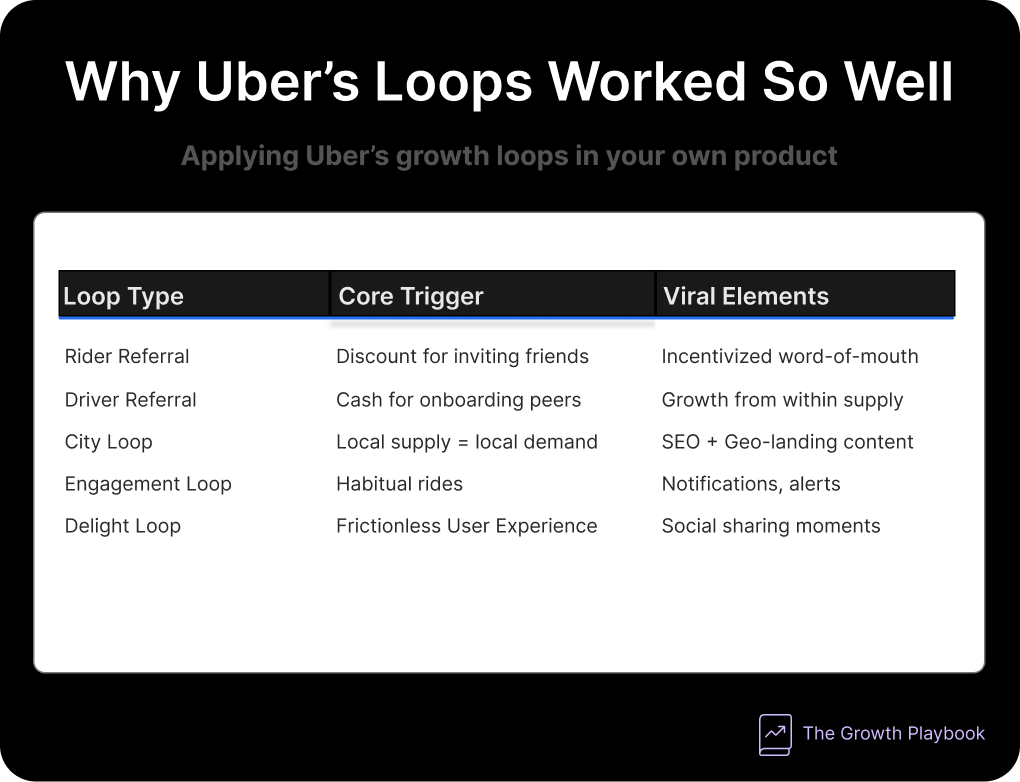
Here’s how you can replicate Uber’s growth loops in your own product:
1. Double-Sided Value
2. Hyperlocal Strategy
3. Behavior-Driven Retention
4. Experience Worth Talking About
In 2017, Substack launched with a counterintuitive thesis:
Don’t chase clicks.
Chase trust.
No algorithm. No ads. Just writers. And their audience.
“Great writing attracts an audience. Great tools keep them growing.”
While media giants were fighting over attention on Twitter and Facebook, Substack was quietly building a platform.
Let's break down the Growth Playbook of what worked…..
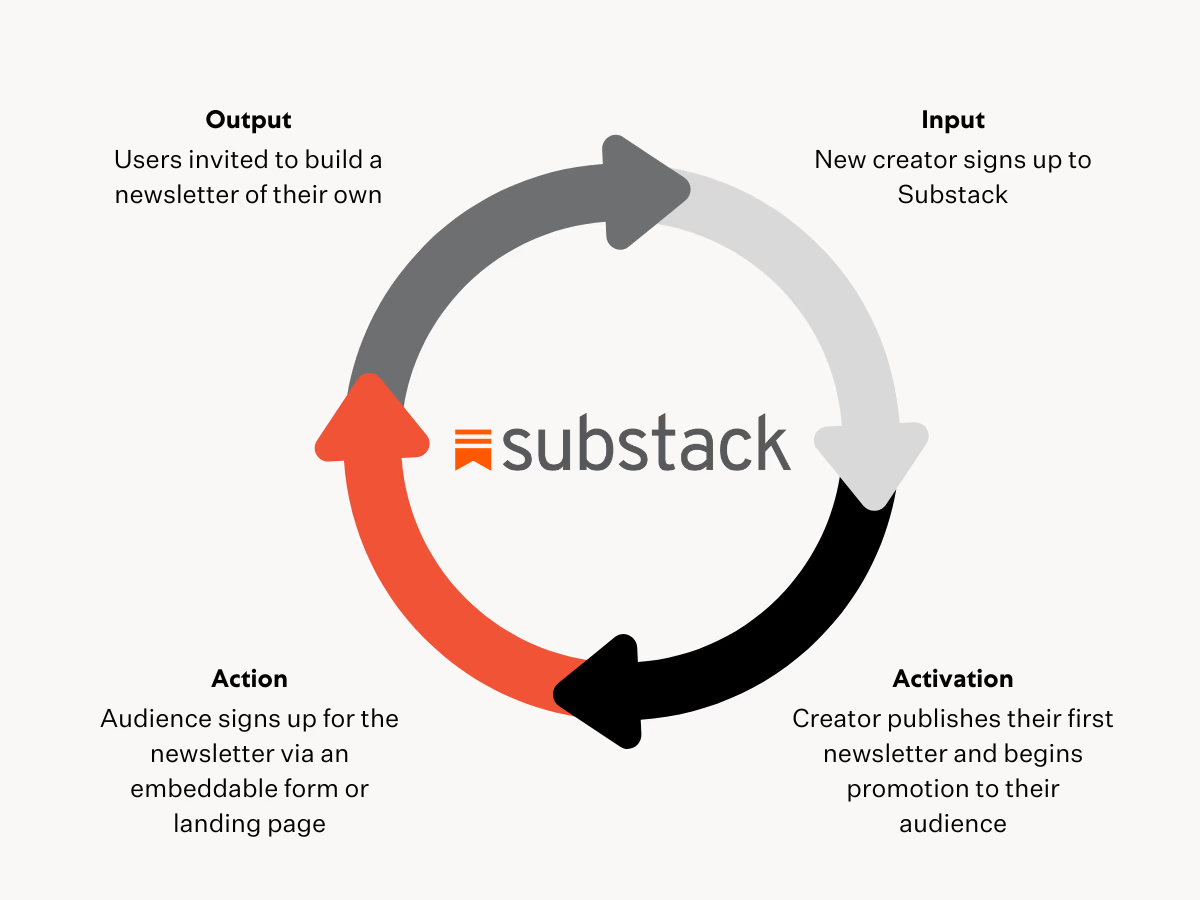
Substack redefined publishing by prioritizing authenticity over algorithms.
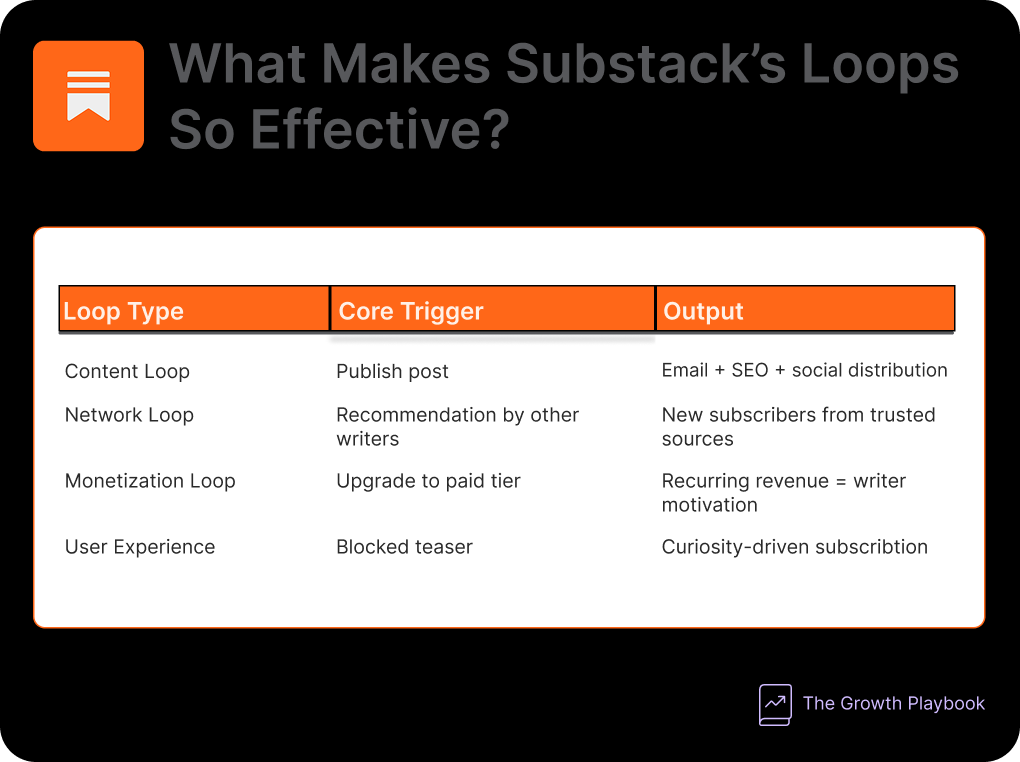
Content Loop (Acquisition): Every published post became an email, SEO-indexed web article, and social preview. Each piece of content fed into acquisition.
Network Loop (Engagement): Writers recommended each other. Growth became compounding, fueled by creator referrals.
Monetization Loop (Referral Program): Writers kept ninety percent of revenue, motivating them to publish more and grow audiences. Paid subscriptions turned into flywheels.
Viral UX Loop: Teaser walls (“Subscribe to keep reading”) converted curiosity into subscribers.
Substack’s Growth Hack:
When a reader clicks a shared article and lands mid-way
they’re blocked by: “Subscribe to keep reading.”
It’s not annoying. It triggers curiosity.
The article title and teaser already earned attention, now it fuels conversion.
The result:
Organic Twitter threads equals viral Medium posts, which equals LinkedIn shares and all feed back to one CTA (Subscribe).
Referrals only work when they emerge naturally. Done poorly, they feel scammy. Done well, they become unstoppable.
Loom nails this by embedding subtle signals. Every video includes “Made with Loom.” It’s not a referral link, it's part of the product experience.
Dropbox did it with incentives. They offered extra storage when you referred a friend, but the genius was in the timing. They asked right when you were about to run out of space, making the referral feel urgent and valuable.
The lesson: don’t just offer rewards. Offer them when they make emotional sense.

Over the years, I've developed the Triple Flywheel Framework, which targets growth beyond funnels by creating, expressing, and expanding value.
The Triple Flywheel Framework illustrates how products transition from being used to being shared and eventually grown by their own community.
Unlike funnels, which have an endpoint, flywheels loop back and build momentum. When executed well, this approach creates a system where users not only consume value but also amplify it.
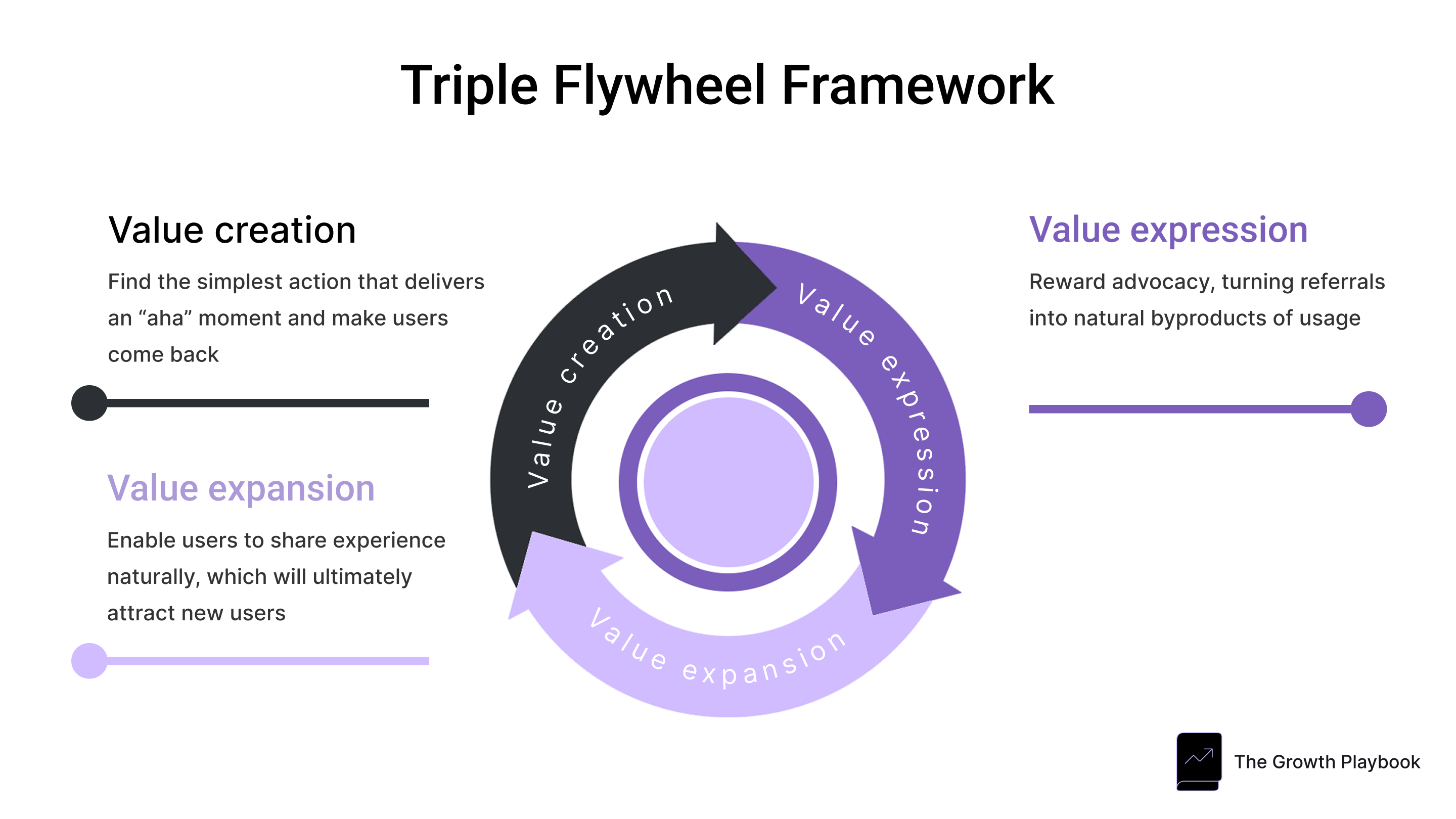
Definition: Find the smallest, fastest action that delivers an “a-ha” moment and make users come back for it.
“Think of this flywheel as oxygen: without repeat engagement, the rest of your loops can’t spin.”
Definition: Enable users to showcase or share their outcomes in ways that expose the product to others.
Definition: Reward advocacy by turning referrals into an organic part of usage.
This flywheel turns advocacy from a growth hack into an embedded cultural behavior.

Think of the three flywheels as gears in a machine:
The magic is in the compounding effect. Once all three are spinning, growth happens without ads users themselves power the engine.
Let’s take an AI journaling app through the Triple-Flywheel lens for example.
The result: sustainable, compounding growth without a single paid ad.

Growth loops are exponential and funnels are linear. Funnels guide users through a single journey that ends. In contrast, growth loops keep regenerating. They build momentum, where each user action sparks the next cycle.
Acquisition loops: Your product generates outputs that can be easily shared or indexed by search engines, such as templates, profiles, portfolios, and public links. These outputs create natural entry points that continue to produce benefits long after the initial launch.
Engagement loops: These tap into human psychology, including habits, collaboration, and visible progress. Examples include Duolingo streaks, Figma collaboration, and fitness dashboards. By leveraging these loops, you not only retain users but also increase their investment in your product.
Referral loops: Align with natural user moments of delight, urgency, or need. Dropbox mastered this by rewarding storage right when users were running out. Uber nailed it with double-sided rider and driver credits. True advocacy comes from moments when sharing feels obvious, and not forced.
The ultimate growth question is deceptively simple.
“What’s the next action a user can take that brings in another?”
If you're a product manager, founder, or growth leader, ditch the pursuit of vanity clicks, empty impressions, and shallow funnels. Focus on building loops that harness emotion, momentum, and mutual value. This is how you turn passive users into active advocates who grow alongside your product.
When users amplify value instead of just consuming it, you can break free from the cycle of ad budgets and cold outreach. You stop pushing the boulder uphill, and instead start spinning the flywheel.
And once the flywheel begins, growth stops being a campaign and instead becomes a system.
“Growth isn’t about being loud. It’s about creating products that are so good, so easy to share, and so rewarding to use that users can’t help but spread the word. Design loops that inspire people, and they’ll inspire the world to follow."
Here's a free template to get the ball rolling: The Triple Flywheel Framework

.svg)


Lorem ipsum dolor sit amet, consectetur adipiscing elit. Suspendisse varius enim in eros elementum tristique. Duis cursus, mi quis viverra ornare, eros dolor interdum nulla, ut commodo diam libero vitae erat. Aenean faucibus nibh et justo cursus id rutrum lorem imperdiet. Nunc ut sem vitae risus tristique posuere.
Lorem ipsum dolor sit amet, consectetur adipiscing elit. Suspendisse varius enim in eros elementum tristique. Duis cursus, mi quis viverra ornare, eros dolor interdum nulla, ut commodo diam libero vitae erat. Aenean faucibus nibh et justo cursus id rutrum lorem imperdiet. Nunc ut sem vitae risus tristique posuere.